Shining a Light
Item set
Items
889–912 of 1091
Advanced search
-
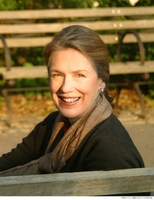 Margaret Brouwer Margaret Brouwer has earned critical accolades for her music's lyricism, musical imagery and emotional power. Lawson Taitte (The Dallas Morning) News wrote, “Ms. Brouwer has one of the most delicate ears and inventive imaginations among contemporary American composers.” Brouwer’s honors include an Award in Music from the American Academy of Arts and Letters, Meet The Composer Commissioning/USA award, Guggenheim Fellowship, Ohio Council for the Arts Individual Fellowship, Cleveland Arts Prize, Lebenbom Award, Ettelson and International Women’s Brass Conference prizes and grants from the National Endowment for the Arts, New Music USA, Ford Foundation, John S. Knight Foundation, Cleveland Foundation and Cuyahoga Arts and Culture. Her music has been called “devoid of slickness…true to a vision” (New York Times), “inhabiting its own peculiarly bewitching harmonic world” (New York Times), and “a marvelous example of musical imagery.” (American Record Guide). The Music Division of the Library for the Performing Arts at Lincoln Center established a Margaret Brouwer Collection in 2015. Her scores, manuscripts, papers, and recordings will be available for research by scholars, composers and performers. Dr. Brouwer served as Head of the Composition Department and holder of the Vincent K. and Edith H. Smith Chair in Composition at the Cleveland Institute of Music (1996 – 2008). She was NEA Composer in Residence with the Roanoke (VA) Symphony (1992-1997) and Composer-in-Residence at Washington and Lee University (1988-1996). Residencies have included those at the MacDowell Colony where she was a Norton Stevens Fellow, the Rockefeller Foundation’s Bellagio Center, Virginia Center for the Creative Arts, and Charles Ives Center for American Music. Recordings of Brouwer’s music can be found on the Naxos, New World, CRI, Crystal, Centaur, and Opus One labels. Orchestral commissions since 2009 include those from the symphonies of Detroit, Dallas, Rochester, American Composers Orchestra, CityMusic Cleveland and performances include Flagstaff, Maryland, Columbus, Toledo, Canton, Cabrillo, Liverpool, the Royal Scottish Symphony Orchestra, the City of Birmingham Orchestra, St. Paul Chamber Orchestra, Seattle, St. Louis, and Poznan Philharmonic (Poland) symphonies. Her ensemble music has been performed by such ensembles as American Modern Ensemble, Alias, counter)induction, Composers Now, Da Capo, MOZAIC, Continuum, Off the Hook Arts, AURA Contemporary Ensemble, the Audubon, Da Vinci, Cavani and Cassatt String Quartets at venues throughout the country including at Carnegie Hall, Merkin Hall, Symphony Space, Chamber Music Society of Lincoln Center, Baryshnikov Arts Center, Orchestra of St. Luke’s “Second Helping,” SubCulture, Kennedy Center, Tanglewood Festival of Contemporary Music, Concoran Gallery, Philips Gallery, National Opera Center, Boston’s Dinosaur Annex, Aspen Summer Music Festival, Bowdoin’s Gamper Festival of Contemporary Music including venues in Taiwan and Germany. In 2018, Brouwer’s 80-minute revised Oratorio, Voice of the Lake was premiered in Cleveland, then brought to Cincinnati to be performed at the International Symposium of the North American Lake Management Society. Chamber work premieres in 2019 were Through the Haze (4 percussionists), All Lines are Still Busy (solo violin), and This Morning is Beautiful (tenor and piano). Her current commission (American Wild Ensemble) will be premiered at the International Clarinet Association Clarinetfest in June 2020.
 -
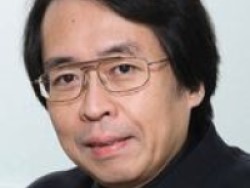 Akira Nishimura Mr. Nishimura was born in Osaka 1953. He studied composition and musical theory to post graduate level at Tokyo National University of Fine Arts and Music. In 1977 he won the first of his numerous later prize winnings at the Queen Elizabeth International Music Composition Competition with HETEROPHONY for string quartet (1975) and the Luigi Dallapiccola Composition Award with MUTAZIONI (1977). In 1980 KECAK (1979) was selected as the best work at the International Rostrum of Composers , and he won awards at the ISCM World Music Days with ODE for EKSTASIS (1981) in 1982, then in 1984, 1988 and 1990. The Otaka Prizes were awarded to him in 1988 for HETEROPHONY for two pianos and orchestra(1987), in 1992 for A RING OF LIGHTS, double concerto for violin, piano and orchestra, and in 1993 for INTO THE LIGHTS OF THE ETERNAL CHAOS. In 2001, he was awarded the ExxonMobil Music Prize and in 2004, the Suntory Music Award. He was composer-in-residence of the Orchestra Ensemble Kanazawa (1993-94) and of the Tokyo Symphony Orchestra (1994-97). Nishimura principally employs heterophony, a characteristic device of Asian traditional music, thereby subtly transforming the intervals, rhythm and melody of his dense multi-layered textures. Though similar to 'micropolyphony' of Ligeti, an Asian perspective informs his technique. Some works are heterophonic melodically, such as HETEROPHONY (1975), and some rhythmically, as in KECAK; the superimposition of trills, tremolos and harmonics contributes to the more complex textures of his later works. He has been commissioned from many overseas music festivals and ensembles such as ULTIMA Contemporary Music Festival Oslo, Octobre en Normandie, Arditti Quartet, Kronos Quartet, ELISION Ensemble, Hannover Society of Contemporary Music and so on. He is currently a Professor at the Tokyo College of Music and the Musical Director of the Izumi Sinfonietta Osaka, KUSATSU International Music Festival.
 -
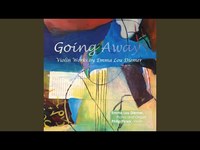 Going Away Emma Lou Diemer
 -
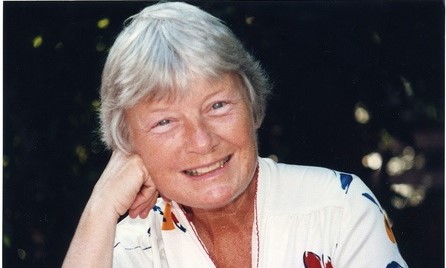 Emma Lou Diemer Emma Lou Diemer was born in Kansas City, Missouri, on November 24, 1927. Her father, George Willis Diemer, was an educator (college president); her mother, Myrtle Casebolt Diemer, was a church worker and homemaker. Her sister, Dorothy Diemer Hendry, was an educator, poet, writer, musician (married to Col. Wickliffe B. Hendry; their children are Betty Augsburger, Terri Sims, Alan Hendry, Bonny Gierhart). Her brothers were George W. Diemer II, an educator, Marine fighter pilot, musician, and John Irving Diemer educator, musician (his children are George W. Diemer III, René Krey, Jack Diemer, Dee Dee Diemer). Emma Lou played the piano and composed at a very early age and became organist in her church at age 13. Her great interest in composing music continued through College High School in Warrensburg, MO, and she majored in composition at the Yale Music School (BM, 1949; MM, 1950) and at the Eastman School of Music (Ph.D, 1960). She studied in Brussels, Belgium on a Fulbright Scholarship and spent two summers of composition study at the Berkshire Music Center. She taught in several colleges and was organist at several churches in the Kansas City area during the 1950s. From 1959-61 she was composer-in-residence in the Arlington, VA schools under the Ford Foundation Young Composers Project, and composed many choral and instrumental works for the schools, a number of which are still in publication. She was consultant for the MENC Contemporary Music Project before joining the faculty of the University of Maryland where she taught composition and theory from 1965-70. In 1971 she moved from the East Coast to teach composition and theory at the University of California, Santa Barbara. At UCSB she was instrumental in founding the electronic/computer music program. In 1991 she became Professor Emeritus at UCSB. Through the years she has fulfilled many commissions (orchestral, chamber ensemble, keyboard, choral, vocal) from schools, churches, and professional organizations. Most of her works are published. She has received awards from Yale University (Certificate of Merit), The Eastman School of Music (Edward Benjamin Award), the National Endowment for the Arts (electronic music project), Mu Phi Epsilon (Certificate of Merit), the Kennedy Center Friedheim Awards (for piano concerto), the American Guild of Organists (Composer of the Year), the American Society of Composers, Authors, and Publishers/ASCAP (annually since 1962 for performances and publications), the Santa Barbara Symphony (composer-in-residence, 1990-92), the University of Central Missouri (honorary doctorate), and many others. She is an active keyboard performer (piano, organ, harpsichord, synthesizer), and in the last few years has given concerts of her own music at Washington National Cathedral, St. Mary's Cathedral and Grace Cathedral in San Francisco, Cathedral of Our Lady of the Angels in Los Angeles, and elsewhere. In 2012 she wrote two works for violinist Philip Ficsor: Concerto for Violin (A Little Parlour Music, Remembrance of Things Past, Santa Barbara Rag) that he premiered October 19, 2012 with the Westmont College Orchestra under Michael Shasberger in Hahn Hall at the Music Academy of the West in Santa Barbara. And a light piece for violin and organ: "Holiday Madness Medley" tlhat he and Diemer premiered at the SB Music Club at First Congregational Church, SB on December 1, 2012. These works will eventually be published. Along with a new work titled "Going Away" they were recorded by Philip Ficsor and Diemer on the album Going Away. Emma Lou lives in Santa Barbara, California, five minutes from the Pacific Ocean.
 -
 Pictures at Another Exhibition Leo Brouwer
 -
 Concierto de Benicassim Leo Brouwer
 -
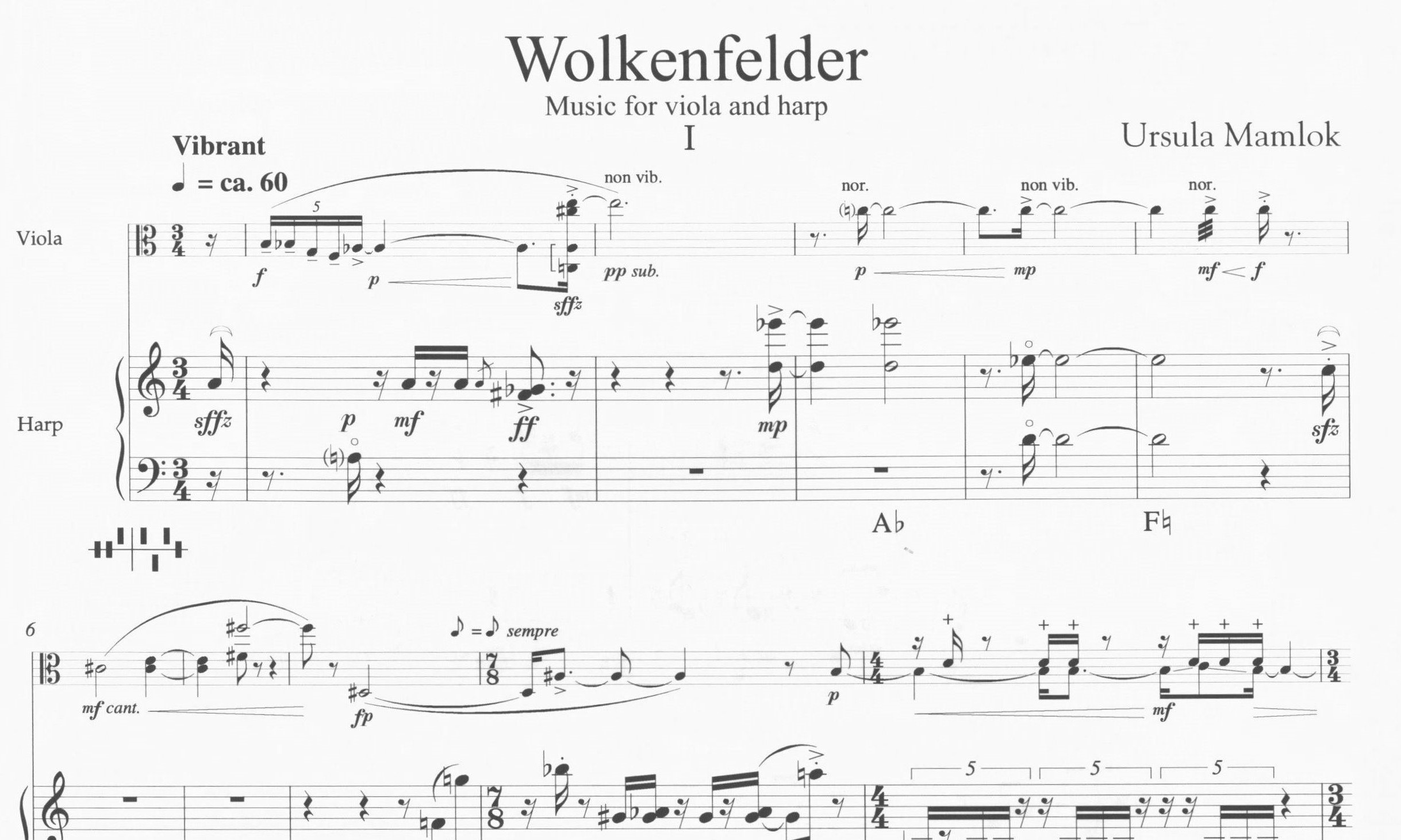 Wolkenfelder Ursula Mamlok
 -
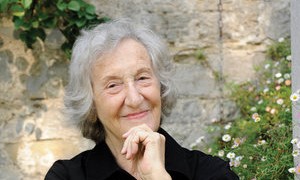 Thea Musgrave Thea Musgrave (b.1928), composer of over a dozen operas, began her studies in Edinburgh and in 1950 went to Paris to study with Nadia Boulanger. While still at the Paris Conservatoire her music began attract attention in her native Scotland. By the mid-sixties she was a much-respected and widely-commissioned composer in the UK, conducting many of her own works. In 1972, Musgrave moved with her husband, the violist and conductor Peter Mark, to Virginia, USA where he was invited to set up the Virginia Opera. From there her career as an opera composer took off, and in 1977 Scottish Opera premiered her watershed grand opera "Mary, Queen of Scots." During the late sixties- early seventies, Musgrave began working on group of works which sought to elevate the inherent drama of the concerto form, extending the conventional boundaries of instrumental performance by directing players in their physical movement around the performance space. While instruments took on a ‘character’ in doing so, such early works were by no means programmatic, and soon after were referred to by the composer as being examples of ‘dramatic-abstract’. In recent years her musical style has developed into something more lyric and immediate, but certainly no less inventive, dramatic or unique. With over 160 mature works to date for choir, orchestra, chamber ensemble and the stage, Musgrave remains a respected voice in composition, having been commissioned by some of the world’s finest companies such as the Royal Opera House, The BBC Orchestrs and Choirs, and the Boston Symphony Orchestra.
 -
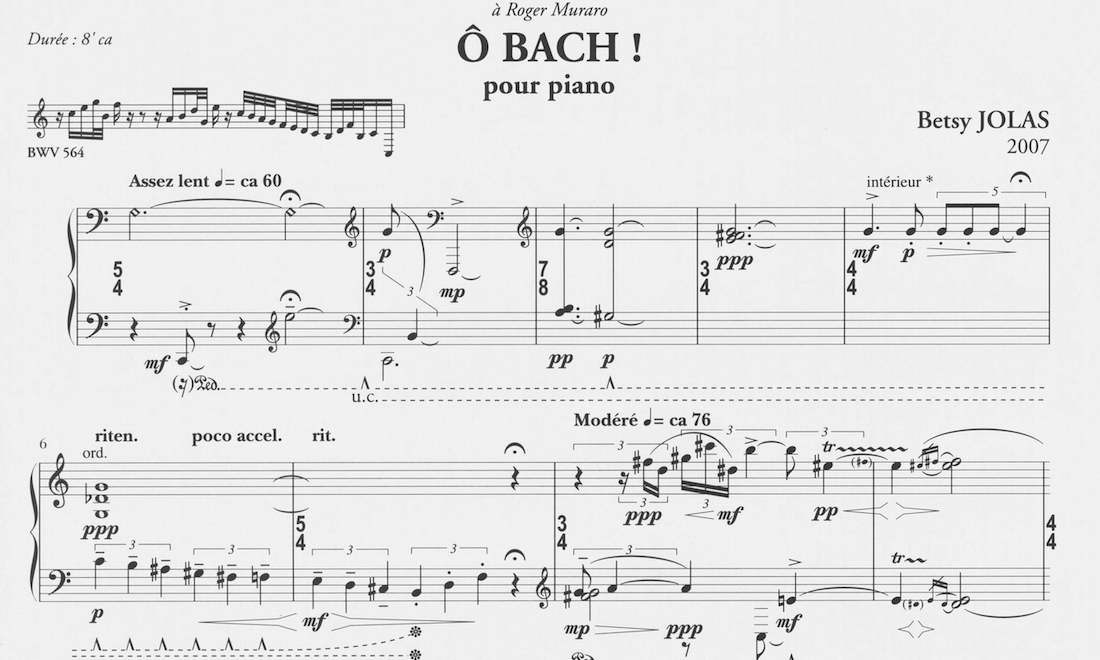 Ô Bach! Betsy Jolas
 -
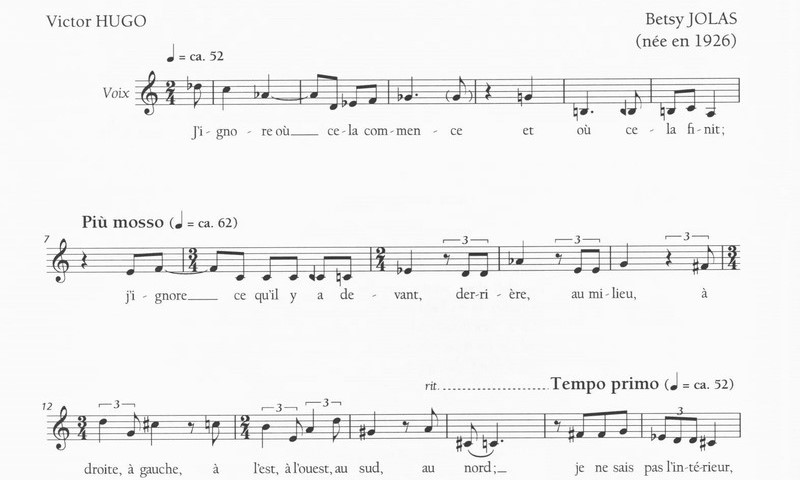 De nuit: deux chants à voix seule Betsy Jolas
 -
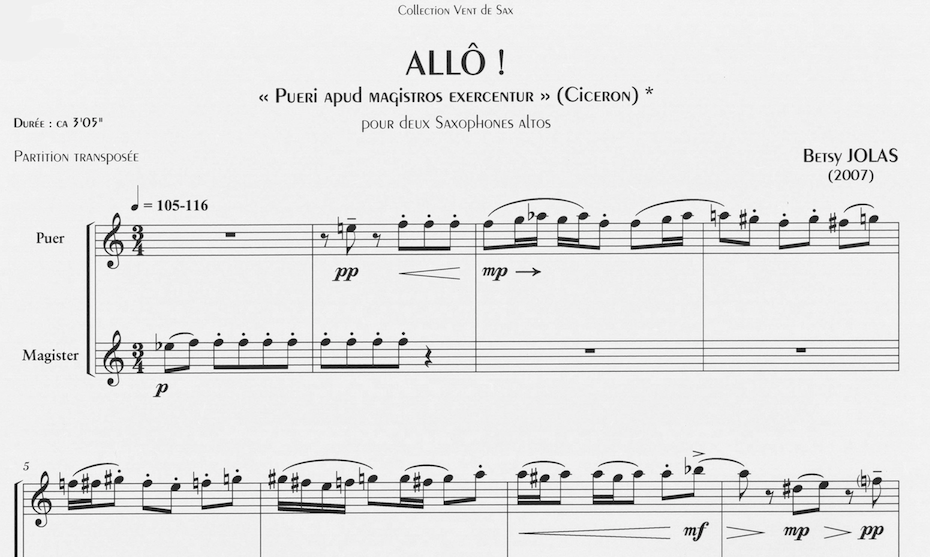 Suite: Puer apud magistros exercentur Betsy Jolas
 -
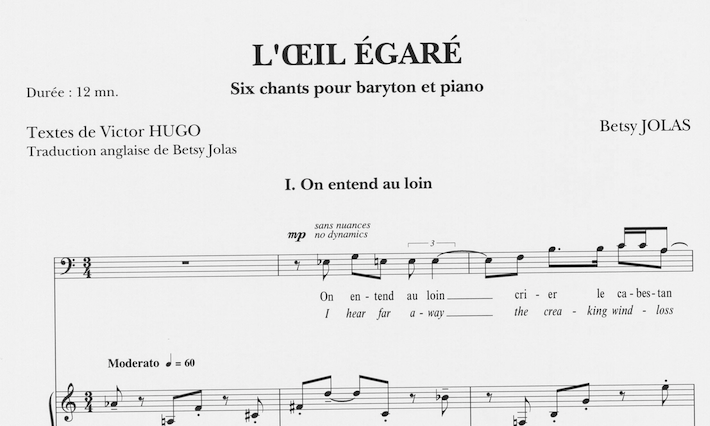 L'œil égaré : six chants pour baryton et piano Betsy Jolas
 -
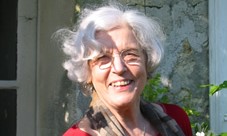 Betsy Jolas Betsy JOLAS, born in Paris in 1926, is the daughter of translator Maria Jolas and poet and journalist Eugène Jolas, founder of the well-known literary magazine "transition", in which the "Finnegans Wake" of James Joyce was published under the heading "work in progress". She came to the U.S. in 1940, completed her general schooling, then started studying composition with Paul Boepple, piano with Helen Schnabel and organ with Carl Weinrich. After graduating from Bennington College, Betsy Jolas returned to Paris in 1946 to continue her studies with Darius Milhaud, Simone Plé-Caussade and Olivier Messiaen at the Conservatoire National Supérieur de Musique of Paris. Prize winner of the International Conducting Competition of Besançon (1953), she has since won many awards, including Copley Foundation of Chicago (1954), ORTF (1961), American Academy of Arts (1973), Koussevitsky Fondation (1974), Grand Prix National de la Musique (1974), Grand Prix de la Ville de Paris (1981), Grand Prix de la SACEM (1982). Betsy Jolas became a member of the American Academy of Arts and Letters in 1983. She has also taught at Tanglewood, Yale, Harvard, Mills College (Darius Milhaud chair), Berkeley, USC and San Diego University, to name a few .Her works, written for a great variety of combinations, have been widely performed throughout the world by first class artists such as Elisabeth Chojnacka, Kent Nagano, William Christie, Claude Helffer, Kim Kashkashian, and by leading groups: The Boston Symphony Chamber Players, the Concord Quartet, the Domaine Musical, the Percussions de Strasbourg, the Lincoln Center Chamber Music Society, the London Sinfonietta, the Ensemble Intercontemporain, the Philharmonia, etc. Twelve of her works have been recorded for EMI, Adès, CRI, Erato, Barclay, several of which have been the recipients of grand prize gramophone awards.
 -
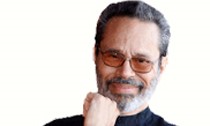 Leo Brouwer Composer, guitarist and music director, Leo Brouwer was born in Havana, Cuba in 1939. He studied with Isaac Nicola, Pujol's pupil and specialising in composition, completed his studies at the Julliard School of Music and at Hartt College of Music.In 1987 Brouwer was selected, along with Isaac Stern and Alan Danielou, to be honourable member of UNESCO in recognition for his music career - an honour that he shares with Menuhin, Shankar, Karajan, Sutherland and other musical luminaries. His latest concerto for guitar is his DOUBLE CONCERTO (Book of Signs), premiered by John Williams and Costas Cotsiolis on 27th January 2004 at the Megaron in Athens.
 -
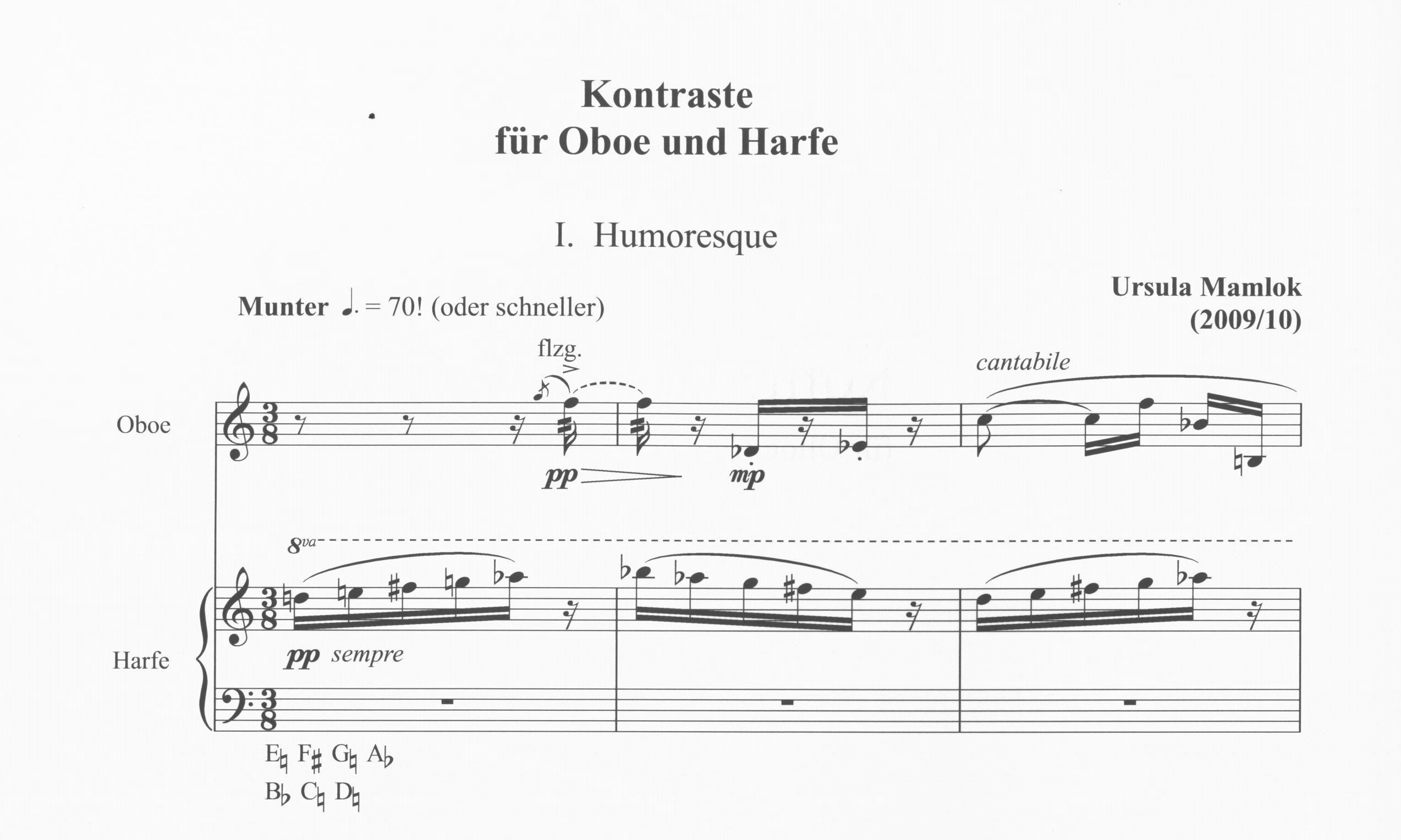 Kontraste for Oboe and Harp Ursula Mamlok
 -
 Terzianum for flute and violin Ursula Mamlok
 -
 Above Clouds for viola and piano Ursula Mamlok
 -
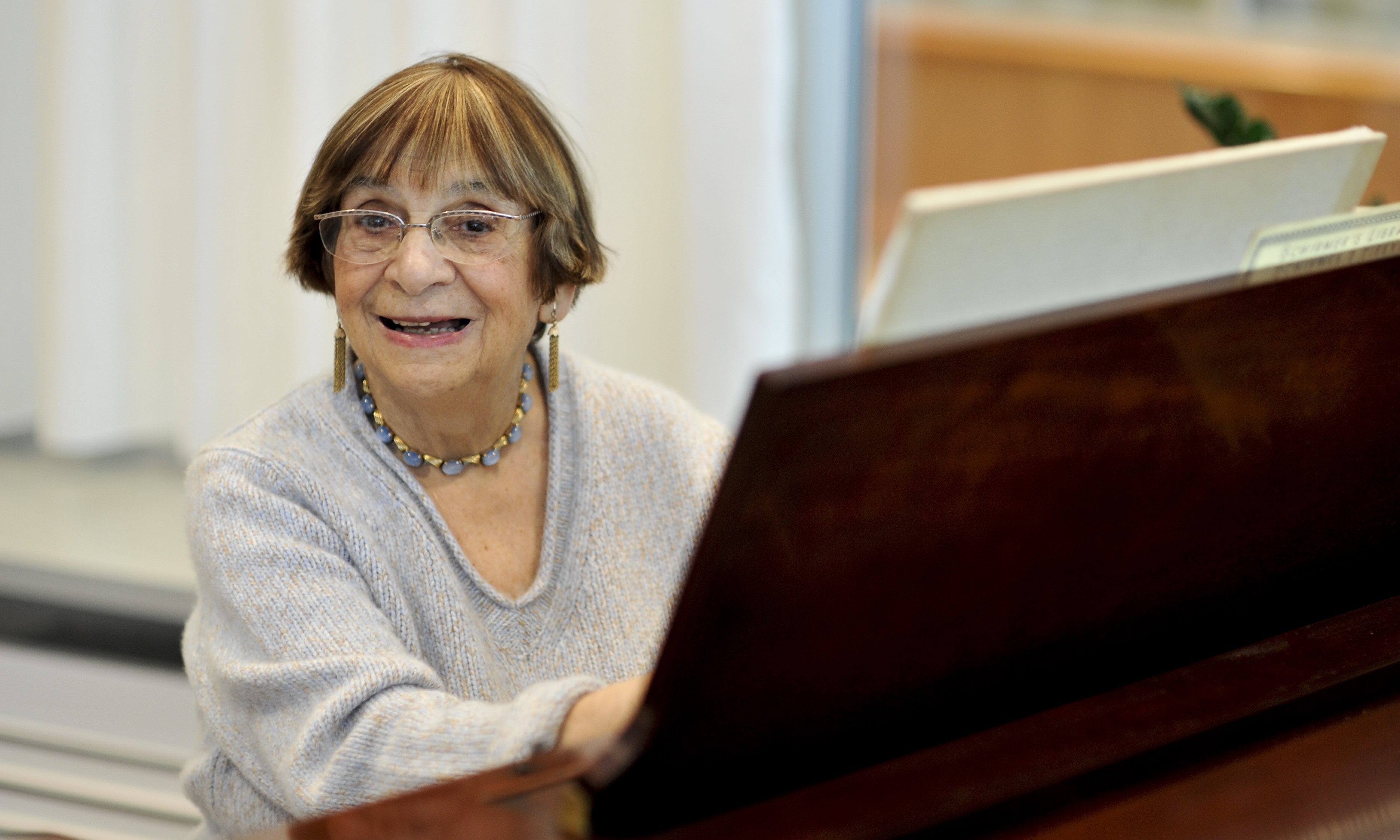 Ursula Mamlok Persecuted by the Nazis because of her Jewish heritage, she left Berlin with her parents, fleeing to Ecuador in 1939. In 1940 she was awarded a scholarship to the Mannes School of Music and travelled unaccompanied to New York as a seventeen year old. In the years that followed, she studied composition, becoming one of the USA’s most renowned women composers. In 2006, she returned to her native city, Berlin. Aged 83, she breathed new life into her career through numerous concerts across Europe, CD, radio and television productions; her biography, Time in Flux – The Composer Ursula Mamlok, was published and a documentary film, Ursula Mamlok Movements, was released.
 -
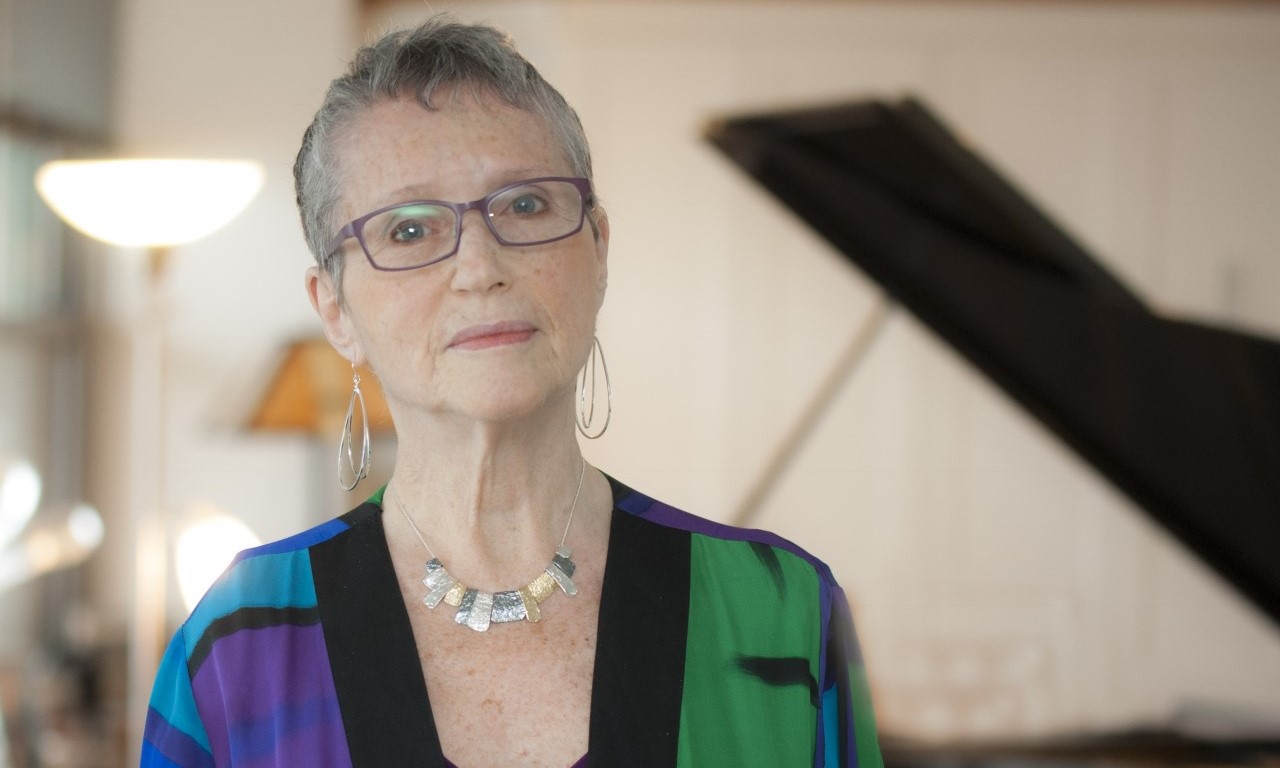 Shulamit Ran Shulamit Ran, a native of Israel, began setting Hebrew poetry to music at the age of seven. By nine she was studying composition and piano with some of Israel’s most noted musicians, including composers Alexander Boskovich and Paul Ben-Haim, and within a few years she was having her works performed by professional musicians and orchestras. As the recipient of scholarships from both the Mannes College of Music in New York and the America Israel Cultural Foundation, Ran continued her composition studies in the United States with Norman Dello-Joio. In 1973 she joined the faculty of University of Chicago, where she is now the Andrew MacLeish Distinguished Service Professor in the Department of Music. She lists her late colleague and friend Ralph Shapey, with whom she also studied in 1977, as an important mentor. In addition to receiving the Pulitzer Prize in 1991, Ran has been awarded most major honors given to composers in the U.S., including two fellowships from the Guggenheim Foundation, grants and commissions from the Koussevitzky Foundation at the Library of Congress, the National Endowment for the Arts, the Fromm Music Foundation, Chamber Music America, the American Academy and Institute for Arts and Letters, first prize in the Kennedy Center-Friedheim Awards competition for orchestral music, and many more. Her music has been played by leading performing organizations including the Chicago Symphony under both Daniel Barenboim and Pierre Boulez, the Cleveland Orchestra under Christoph Von Dohnanyi in two U.S. tours, the Philadelphia Orchestra under Gary Bertini, the Israel Philharmonic under Zubin Mehta and Gustavo Dudamel, the New York Philharmonic, the American Composers Orchestra, The Orchestra of St. Luke’s under Yehudi Menuhin, the Baltimore Symphony, the National Symphony (in Washington D.C.), Contempo (the Contemporary Chamber Players) at the University of Chicago under both Ralph Shapey and Cliff Colnot, the Orchestre de la Suisse Romande, the Jerusalem Orchestra, the vocal ensemble Chanticleer, and various others. Chamber and solo works are regularly performed by leading ensembles in the U.S. and elsewhere, and recent vocal and choral ensemble works have been receiving performances internationally. Between 1990 and 1997 she was Composer-in-Residence with the Chicago Symphony Orchestra, having been appointed for that position by Maestro Daniel Barenboim as part of the Meet-The-Composer Orchestra Residencies Program. Between 1994 and 1997 she was also the fifth Brena and Lee Freeman Sr. Composer-in-Residence with the Lyric Opera of Chicago, where her residency culminated in the performance of her first opera, “Between Two Worlds (The Dybbuk)." She was the Paul Fromm Composer in Residence at the American Academy in Rome, September-December 2011. Ran served as Music Director of “Tempus Fugit," the International Biennial for Contemporary Music in Israel in 1996, 1998 and 2000. Since 2002 she is Artistic Director of Contempo (Contemporary Chamber Players of the University of Chicago). In 2010 she was the Howard Hanson Visiting Professor of Composition at Eastman School of Music. Shulamit Ran is an elected member of the American Academy of Arts and Letters, where she was Vice President for Music for a 3-year term, and of the American Academy of Arts and Science. The recipient of five honorary doctorates, her works are published by Theodore Presser Company and by the Israeli Music Institute and recorded on more than a dozen different labels. The recently completed Glitter, Doom, Shards, Memory, String Quartet No. 3, was commissioned by Music Accord, a consortium of concert presenters in the U.S. and abroad, for Pacifica Quartet, and will receive its first performance in June 2014 in Tokyo.
 -
 Ladies in White: for clarinet, cello, and piano Paquito D'Rivera
889–912 of 1091